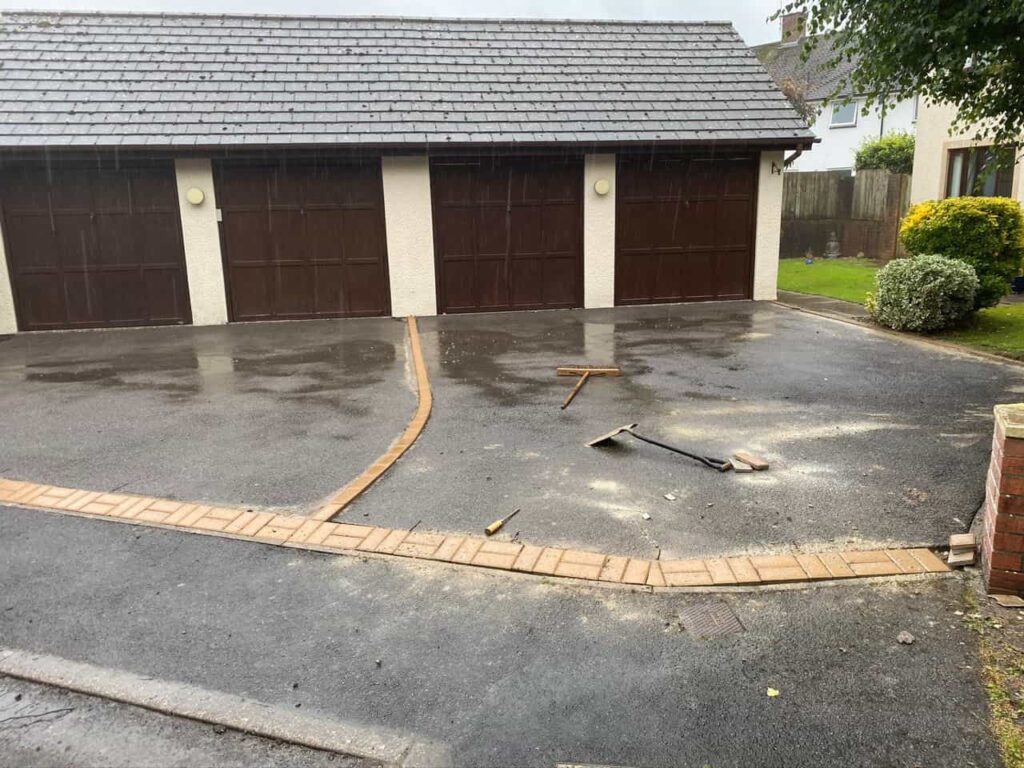
A driveway has to do more than provide somewhere to park. It needs to cope with regular vehicle use, fit naturally with the appearance of the property and remain practical to maintain over time. For many homeowners, resin-bound surfacing offers a useful combination of these qualities.
Resin driveways are often chosen because they provide a smooth, consistent finish while retaining the visual character of natural aggregate. They can work particularly well where homeowners want to replace a tired or uneven-looking surface with something that feels more coordinated and contemporary.
For properties in Nottingham, Nottinghamshire, the suitability of a resin driveway depends on more than appearance alone. The existing base, ground conditions, drainage, edge restraints and intended vehicle use all need to be considered before installation. When the complete system is prepared correctly, resin-bound surfacing can provide a practical and attractive upgrade.
What Makes Resin Driveways a Practical Choice for Modern Properties?
A resin driveway can be a practical option where homeowners want a durable-looking, relatively low-maintenance and visually consistent surface.
Potential advantages include:
- A smooth and uniform finish
- A wide choice of aggregate appearances
- Defined edges and neat boundaries
- Suitability for both vehicle and pedestrian use
- Reduced loose stone compared with unbound gravel
- Good visual continuity across larger areas
- The ability to complement paths and entrances
- Straightforward routine maintenance
- A surface that can form part of a permeable system when correctly designed
- Flexibility around different driveway shapes
The important point is that these benefits depend on correct preparation and installation beneath the visible surface.
Resin-Bound Surfacing Creates a Consistent Finish
One of the main attractions of resin-bound surfacing is its even appearance.
The aggregate is mixed with resin before being installed, creating a continuous surface rather than a collection of loose stones.
This can make the driveway feel more ordered and deliberate.
For modern properties, where clean lines and simple finishes are often preferred, this consistent appearance can work particularly well.
Resin-Bound and Resin-Bonded Are Not the Same
The two terms are sometimes confused.
With resin-bound surfacing, aggregate is mixed thoroughly with resin before installation.
Resin-bonded surfacing uses a different application process and produces different surface characteristics.
This distinction is important when choosing a driveway because the materials behave differently.
Homeowners should therefore understand which system is being proposed rather than relying on the general word “resin”.
Decorative Aggregate Gives Useful Design Flexibility
Resin-bound driveways can be created using different aggregate blends.
This allows homeowners to choose a finish that complements the property without making the driveway feel disconnected from its surroundings.
The final appearance can be subtle or more distinctive depending on the aggregate selected.
This flexibility can make resin particularly useful where the driveway needs to coordinate with walls, paths, planting or other exterior features.
The Driveway Can Look More Integrated With the Property
A driveway occupies a large proportion of the frontage at many homes.
If the surface looks tired or inconsistent, it can affect the appearance of the entire entrance.
A resin finish can provide a more unified look across the area.
The result can be particularly effective where the same design language is carried into nearby paths or pedestrian routes.
Resin Can Work Well Around Different Driveway Shapes
Driveways are not always simple rectangles.
Some contain curves, narrow access points or irregular boundaries.
A resin-bound surface can be installed within suitably prepared and contained areas, allowing the layout to follow the shape of the property.
This can make it a practical option where a neat continuous finish is wanted across a more complex area.
Smoothness Can Improve Everyday Usability
A resin-bound driveway provides a relatively smooth and consistent surface when installed correctly.
This can make everyday walking, moving bins and accessing parked vehicles more straightforward.
The absence of loose aggregate across the main surface can also make the area feel tidier.
The quality of the finished levels is still important because any driveway can become awkward if the underlying preparation is uneven.
Resin Driveways Can Support Regular Vehicle Use
A driveway must be designed around the vehicles that will use it.
Resin-bound surfacing can be suitable for domestic vehicle areas where the supporting construction has been prepared appropriately.
The surface itself should not be treated as the only structural component.
The base beneath it needs to provide the stability required for regular vehicle loads.
The Base Is Critical to Long-Term Performance
The visible resin finish may attract most of the attention, but the condition beneath it is equally important.
An unstable or poorly prepared base can allow movement to develop.
This movement can eventually influence the surface above.
A professional installation therefore starts by assessing what lies beneath the proposed driveway rather than focusing only on the finished appearance.
An Existing Driveway May Be Suitable for Overlay
In some situations, an existing driveway can provide a suitable base for resin-bound surfacing.
This depends on its condition.
If the surface beneath is stable, structurally appropriate and properly prepared, it may be possible to use it as part of the new installation.
Where significant cracking, movement or settlement is present, further preparation may be required first.
Existing Cracks Should Not Simply Be Covered
A new resin surface should not be expected to hide structural problems permanently.
Cracks can sometimes indicate movement below the visible surface.
If these are simply covered without understanding their cause, the underlying issue may continue.
Professional assessment helps determine whether the existing base is suitable or whether defective areas need to be addressed beforehand.
Ground Movement Needs to Be Considered
All driveways rely on the stability of the ground beneath them.
Where the underlying construction is weak or inconsistent, the finished surface can be affected over time.
Resin is not a substitute for appropriate groundwork.
Where ground movement is evident, the cause should be considered before installation begins.
Compaction Matters
A stable driveway foundation depends on suitable preparation and compaction.
If the supporting layers settle after installation, the resin surface above can be placed under unnecessary stress.
Correct compaction helps reduce this risk.
The exact construction should reflect the ground conditions and intended use of the area.
Edge Restraints Help Define and Support the Driveway
Resin-bound surfacing needs clearly defined boundaries.
Suitable edging helps contain the surface and provides a neat transition between the driveway and surrounding areas.
Edges can also contribute to the overall design.
They may be used to create contrast or simply provide a clean, restrained finish.
Defined Edges Can Improve the Overall Appearance
A modern driveway often benefits from clear boundaries.
Edges help separate the vehicle area from lawns, planting or paths.
This can make the surface look more intentional and reduce the visual clutter that can occur when different materials meet without clear definition.
Good edging therefore contributes both practically and visually.
Resin Can Work Well With Entrance Paths
Where the property has a separate path leading to the front entrance, resin-bound surfacing can sometimes be used to create visual continuity between the driveway and pedestrian route.
The same aggregate blend may be carried through both areas.
Alternatively, complementary finishes can be selected.
The construction beneath each section should still reflect its intended use.
Paths and Driveways Have Different Load Requirements
A pedestrian path and a vehicle driveway may look identical at the surface while requiring different supporting construction.
The driveway needs to accommodate vehicle loads and manoeuvring.
A path experiences far less structural demand.
Professional planning takes these differences into account even where the visible finish is consistent.
Resin Can Complement Contemporary Landscaping
Modern landscaping often uses simple shapes, defined edges and relatively restrained materials.
A resin-bound driveway can work well within this type of layout because the aggregate finish provides texture without creating an overly busy surface.
The driveway can therefore form part of a wider exterior design rather than dominating it.
Resin Can Also Suit More Traditional Properties
A contemporary finish does not necessarily mean stark or highly modern.
The choice of aggregate can influence the overall appearance considerably.
More natural-looking blends can create a softer result.
This allows resin to complement a range of property styles while still providing the practical benefits of a bound surface.
There Is No Need for Loose Aggregate Across the Main Surface
Loose gravel can move under vehicle tyres and foot traffic.
Resin-bound aggregate is held within the resin matrix, so the surface behaves differently.
This can reduce the amount of loose material being displaced across the driveway.
For homeowners who prefer a more contained surface, this can be a useful practical advantage.
The Surface Can Be Easier to Sweep
Because the aggregate is bound together, leaves and general debris can often be removed more easily than from loose gravel.
Routine sweeping can help keep the surface tidy.
This does not mean resin requires no maintenance.
Outdoor surfaces will still accumulate dirt, organic material and other debris over time.
Resin Is Relatively Low Maintenance
One reason resin driveways appeal to many homeowners is that routine care can be straightforward.
Regular sweeping and suitable periodic cleaning can help maintain the appearance.
The absence of conventional paving joints across the main surface also changes the type of maintenance required compared with some other driveway materials.
Low maintenance, however, should not be confused with maintenance-free.
No Driveway Surface Is Completely Maintenance-Free
Leaves, soil and debris can collect on any outdoor area.
If allowed to remain, organic material can affect the appearance of the surface.
Routine cleaning remains worthwhile.
Homeowners should also monitor the driveway for any developing movement or damage rather than assuming the surface will never require attention.
Moss and Organic Growth Can Still Appear
A bound surface does not automatically prevent all natural growth.
Where shaded or damp conditions exist, organic material can accumulate.
Regular sweeping and suitable cleaning can help manage these conditions.
The surrounding environment will influence how quickly this occurs.
Resin Can Reduce the Regular Joint Maintenance Associated With Block Paving
Block paving contains many individual joints.
These can require periodic attention as part of normal maintenance.
Resin-bound surfacing is continuous across the main area, so the maintenance pattern is different.
This can appeal to homeowners who prefer a more uniform surface with fewer visible joints.
Permeability Can Be a Useful Feature
A correctly installed resin-bound surface has an open structure that can allow water to pass through.
This can form part of a permeable driveway system.
However, the surface alone does not determine drainage performance.
The layers beneath also need to be suitable if water is intended to pass through the complete construction.
Resin Does Not Automatically Solve Drainage Problems
It is important not to assume that installing resin over an existing driveway will automatically correct poor drainage.
If water is already collecting because of unsuitable levels or an inadequate base, those conditions need to be assessed.
A permeable surface can only work effectively as part of a properly considered system.
Drainage planning should therefore take place before installation rather than after the driveway is finished.
Finished Levels Are Important
The driveway needs to sit correctly in relation to surrounding paths, entrances and garden areas.
Poor levels can create practical problems regardless of the surface material chosen.
During preparation, the intended finished height and falls should be considered.
This helps create a driveway that connects properly with the rest of the property.
Water Should Not Be Allowed to Collect Unnecessarily
Standing water can indicate that levels or drainage are not working as intended.
A resin driveway should therefore be planned with rainfall in mind.
Where permeability is part of the design, the supporting layers need to accommodate it.
Where water is managed through surface falls or other measures, these need to be incorporated correctly.
Resin Can Help Create a Cleaner-Looking Parking Area
A continuous aggregate finish can make parking spaces feel more organised.
The surface can be installed across a broad area without the visual interruptions created by numerous material changes.
This can be particularly useful where several vehicles are parked at the property.
The practical layout should still be designed around actual vehicle movements.
Manoeuvring Areas Need Strong Preparation
Where vehicles regularly turn within the driveway, certain areas may experience greater stress.
The supporting construction should account for this.
The resin finish itself should not be expected to compensate for inadequate foundations.
Good groundwork is particularly important where steering and repeated manoeuvring occur in the same locations.
Vehicle Use Should Be Considered Before Installation
A driveway used lightly will experience different demands from one supporting several vehicles every day.
The installation should reflect actual use.
Professional planning considers how vehicles enter, park, turn and leave.
This helps ensure that the base and complete driveway system are suitable for the way the area will function.
Resin Can Be Used to Create Defined Parking Areas
Different aggregate blends or borders can sometimes be used to create subtle visual distinctions within a larger driveway.
This can help define the edge of the parking area or create a transition to a pedestrian route.
The design does not need to be complicated.
Simple, restrained detailing often works well.
Borders Can Add Structure Without Making the Design Busy
A contrasting border can provide a clear frame around the driveway.
This may help tie the surface into walls, steps or other existing features.
The purpose should be both visual and practical.
The border needs to work with the driveway construction rather than acting as decoration alone.
Resin Offers a Wide Range of Aggregate Appearances
Aggregate selection has a major influence on the finished result.
Some blends create a light and understated surface, while others have stronger contrast.
The right choice depends on the property and surrounding exterior.
Homeowners should consider how a sample will look across the complete driveway rather than making a decision from a small section alone.
Larger Areas Can Make Aggregate Colours Look Different
A small sample gives only an indication of the final appearance.
Once installed across a large driveway, the visual effect can feel quite different.
The relationship with the property, garden and surrounding materials also influences how the colour is perceived.
Considering the complete frontage can help avoid selecting an aggregate that looks disconnected from the rest of the exterior.
Resin Can Help Update a Tired Property Entrance
An ageing driveway can make the wider frontage feel neglected even when the property itself is well maintained.
A new resin surface can create a more consistent appearance.
This can be especially noticeable where the existing driveway contains several repaired sections or different materials.
The condition beneath still needs to be assessed before any new surface is installed.
Cosmetic Improvement Should Not Hide Structural Problems
A resin driveway can certainly improve appearance, but appearance should not override construction.
If the existing driveway is moving, sinking or badly cracked, simply covering it may not provide a suitable result.
The underlying problem should be understood first.
A successful upgrade depends on combining appearance with correct preparation.
Resin Can Be Useful for Reworking Irregular Existing Areas
Older driveways sometimes contain awkward transitions between parking spaces and paths.
Where the existing construction can be prepared appropriately, resin may help create a more unified surface.
This can simplify the overall appearance.
The design should still preserve practical levels and clearly defined boundaries.
Driveway Width and Access Need to Be Considered
A new surface will not improve a layout that is difficult to use.
Before installation, it is worth considering whether vehicles can enter and leave comfortably.
The location of edges, paths and landscaping can all affect movement.
Good driveway design combines the chosen surface with practical access.
The Surface Should Suit Everyday Walking as Well as Driving
Driveways are used by people as much as vehicles.
Homeowners walk across them when entering the property, carrying shopping or moving bins.
A relatively smooth resin-bound finish can provide convenient pedestrian access.
Correct levels and installation are important for this everyday usability.
Resin Can Create Consistency Around Steps and Entrances
Where a driveway approaches entrance steps or other changes in level, careful detailing can create a clean transition.
The surrounding construction needs to be considered rather than simply extending the resin up to every boundary.
Good finishing around these areas can make the entire frontage feel more coordinated.
Installation Quality Matters More Than Appearance Alone
A visually attractive resin driveway will only perform well if it has been installed correctly.
Preparation, mixing, application, base condition, edge restraints and weather conditions during installation can all matter.
This is why professional workmanship is important.
The surface is part of a complete construction process, not simply a decorative coating.
Correct Mixing Is Important
Resin-bound surfacing relies on the correct combination of aggregate and resin.
Consistent mixing helps create an even finish across the area.
Variation in preparation can affect the final surface.
Professional installation follows a controlled process rather than treating resin as a simple material that can be applied without careful handling.
Consistent Installation Helps Avoid Visual Variation
Because resin driveways are continuous surfaces, inconsistencies can become noticeable.
Careful installation helps maintain a uniform appearance from one section to another.
This is particularly important across larger driveways.
Good planning helps ensure the work progresses logically across the complete area.
Preparation Should Match the Existing Site
No two driveways have exactly the same conditions.
One may already contain a strong existing base.
Another may require more substantial groundwork.
The surface specification should therefore be based on the actual site.
Applying the same preparation to every property can overlook important differences beneath the driveway.
Resin Is Not a Repair Product for Failing Foundations
A resin finish can improve the appearance of a suitable driveway base, but it should not be considered a shortcut for structural repairs.
Where the existing construction is failing, the cause needs to be addressed.
Otherwise, movement can eventually affect the new surface.
This is one of the most important considerations when upgrading an older driveway.
A Professional Survey Can Determine Whether the Existing Base Is Suitable
Homeowners may find it difficult to judge whether an existing driveway can support resin.
Surface appearance does not always reveal what is happening beneath.
Professional assessment can look for movement, settlement and other indicators.
This allows the installation approach to be based on the actual condition rather than assumptions.
Resin Can Be a Practical Alternative to a Highly Detailed Surface
Some homeowners want a decorative driveway but do not want the strong patterning associated with individual paving units.
Resin can provide visual interest through natural aggregate while retaining a relatively simple overall appearance.
This can create a balanced result.
The surface feels decorative without necessarily dominating the frontage.
It Can Also Provide an Alternative to Plain Continuous Surfacing
At the other end of the scale, homeowners may prefer more texture and variation than a completely plain driveway surface provides.
Resin-bound aggregate can offer this while remaining continuous.
This positions resin between highly patterned paving and simpler uniform surfacing in terms of visual character.
Resin Can Complement Other Exterior Materials
A resin driveway does not need to be used everywhere.
It can sit alongside paving, brickwork, walls or other materials.
Careful colour selection can help create a coordinated result.
The transitions between surfaces should be planned clearly so the different materials feel intentional.
The Driveway Can Be Designed Around Existing Features
Trees, planting areas, walls or steps may influence the shape of the driveway.
A good installation should respond to these features.
The layout can then be designed around the property rather than forcing existing elements to fit an unsuitable standard shape.
This contributes to both appearance and practical use.
Future Maintenance Should Be Considered Before Choosing Resin
Homeowners should understand how they will care for the driveway once it is installed.
Routine sweeping and appropriate cleaning are generally important.
Debris should not be allowed to build up unnecessarily.
Recognising these requirements before installation helps ensure that the surface matches expectations.
Early Attention to Damage Is Sensible
Like any driveway, a resin surface should be monitored over time.
If movement or damage begins to appear, it is better to understand the cause early.
This is particularly important where the issue may originate in the base.
Ignoring developing defects can allow them to become more extensive.
Resin Driveways Should Be Viewed as a Complete System
The finished aggregate surface is only the most visible layer.
The base, preparation, drainage, edges and intended use all influence performance.
Thinking of resin as a complete driveway system produces a more realistic understanding of what makes an installation successful.
Focusing only on colour and appearance can overlook the factors that matter most over time.
Not Every Existing Driveway Is Suitable for Resin Without Further Work
It can be tempting to assume resin can simply be installed over any existing surface.
That is not always the case.
Substantial cracking, settlement or poor construction may need to be corrected first.
Professional assessment helps determine what preparation is appropriate.
This reduces the likelihood of underlying defects influencing the finished driveway.
The Right Surface Should Match the Property and Its Use
Resin may be an excellent choice for one property and less appropriate for another.
The decision should reflect vehicle use, layout, ground conditions, drainage and desired appearance.
No driveway material should be recommended simply because it is currently popular.
The most practical upgrade is the one that suits the actual site.
Resin Driveway Installation in Nottingham, Nottinghamshire
For homeowners in Nottingham, Nottinghamshire, resin-bound surfacing can provide a practical way to improve both the appearance and usability of an existing driveway.
At Nottingham Resin Drives, we can assess the current surface, underlying base, vehicle use, drainage, finished levels and surrounding features before recommending an appropriate installation approach.
Where the existing construction is suitable, it may be possible to prepare it for a new resin-bound surface. Where movement, cracking or other underlying problems are present, these conditions can be considered before the finished surface is installed.
The aim is to create a driveway that is visually consistent, practical for everyday use and supported by appropriate preparation beneath it.
Conclusion
Resin driveways can be a practical upgrade for modern homes because they combine a smooth, consistent surface with the natural appearance of decorative aggregate.
They can work well across different driveway shapes, provide convenient pedestrian and vehicle access, coordinate with paths and entrances, and require relatively straightforward routine maintenance. A correctly designed resin-bound system can also support permeability where the complete construction beneath it is appropriate.
However, the finished resin is only part of the driveway. The existing base, ground stability, compaction, drainage, edge restraints and vehicle use all need to be considered if the surface is to perform properly.
If you are considering a resin driveway for your property in Nottingham, Nottinghamshire, contact Nottingham Resin Drives. We can assess the area and recommend an appropriate resin-bound driveway installation based on the condition, layout and intended use of your property.
Call us on: 0115 6479811
Click here to find out more about Nottingham Resin Drives
Click here to complete our contact form and see how we can help with your driveway needs.